Service · Des Moines, IA
Sub-Slab Depressurization in Des Moines, IA
The standard radon mitigation method for basement and slab-on-grade homes: a fan-driven system that pulls soil gas from under the foundation before it enters the house.
Send us your details and we get back to you fast with a written quote.
We do not make you wait weeks for a test or an install date.
One shop, one service area, no franchise call center.
Sub-slab depressurization is the method the EPA points to as the most reliable way to reduce indoor radon in homes with a basement or a slab-on-grade foundation, and it is what most Des Moines mitigation systems actually are, whatever the umbrella term used to describe the job.
The idea is simple even though the execution has to be precise: create a zone of negative pressure under the slab so soil gas gets pulled out through a pipe and fan instead of finding its way up through cracks and gaps into your living space.
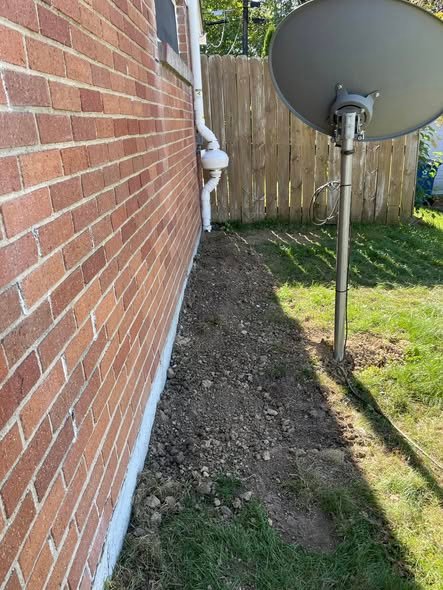
How sub-slab depressurization actually works
A suction point is created under the slab, usually by boring a hole and hollowing out a small pit in the underlying soil or gravel. A PVC pipe runs from that point up through the house or along an exterior wall to above the roofline, with an inline fan that continuously draws air from beneath the foundation and vents it outside.
The negative pressure under the slab has to be strong enough to overcome the pressure differences that pull soil gas indoors in the first place, which is why sealing cracks, gaps and the sump pit matters just as much as the pipe and fan themselves.
Why this method over the alternatives
Sub-slab depressurization typically achieves a 80 to 99 percent reduction in indoor radon levels, which is a higher and more consistent result than sealing alone or ventilation-based approaches tend to produce on their own. Sealing is still part of the job, but as a supplement to the vacuum system, not a replacement for it.
One suction point or more
Smaller homes with a single open slab area often only need one suction point. Larger homes, homes with multiple foundation sections, or slabs broken up by interior footings sometimes need a second suction point to get consistent negative pressure across the whole foundation. We test the vacuum diagnostically during install rather than assuming one point is enough.
What homeowners in Polk County ask about most
The two most common questions are noise and appearance. A properly installed fan runs quietly enough that most homeowners forget it is on, and we route the pipe to minimize how visible it is from the street and from inside the house.
Sub-Slab Depressurization across Polk County
We run this work throughout Des Moines and the surrounding towns. In places like Des Moines, West Des Moines and Ankeny, no two elevations are exactly the same, so every job gets scoped on site rather than over the phone.
- Sub-Slab Depressurization in Des Moines
- Sub-Slab Depressurization in West Des Moines
- Sub-Slab Depressurization in Ankeny
- Sub-Slab Depressurization in Urbandale
- Sub-Slab Depressurization in Johnston
- Sub-Slab Depressurization in Clive
- Sub-Slab Depressurization in Waukee
- Sub-Slab Depressurization in Altoona
- Sub-Slab Depressurization in Pleasant Hill
- Sub-Slab Depressurization in Windsor Heights
- Sub-Slab Depressurization in Norwalk
- Sub-Slab Depressurization in Indianola
- Sub-Slab Depressurization in Carlisle
Common questions
Sub-Slab Depressurization questions we hear in Des Moines
For most basement and slab-on-grade homes, yes, this is the method behind what people generally call a radon mitigation system. Crawl space homes use a related but distinct approach, covered on our crawl space mitigation page.
A properly designed and installed system typically reduces indoor radon by 80 to 99 percent, though the exact result depends on your starting level and foundation.
Yes. We test the system after install, and if the vacuum is not consistent across the whole slab, an additional suction point can be added.
What neighbors say
Referral work is most of our schedule
PLACEHOLDER review. Two to four sentences in a real customer voice, naming the job and the city.
PLACEHOLDER Name — Des Moines
PLACEHOLDER review. Mention a specific detail — the crack repair matched, the crew cleaned up, the estimate held.
PLACEHOLDER Name — Des Moines
PLACEHOLDER review. Something about responsiveness or the written scope works well here.
PLACEHOLDER Name — Des Moines
Get a straight answer on your wall
Free on-site estimates across Des Moines and Polk County. We look at the actual wall, measure the elevations and send a written scope — no charge and no sales pitch.